Blog
Notes from the loop.
How an autonomous engineer is actually built — the rules, the architecture, and the unit of work that makes it trustworthy.
From Copilots to Autonomous Agents: the Real AI Shift
AI copilots suggest; autonomous agents act. The real shift is who holds the loop, why verification is the price of admission, and where humans still belong.
Read post →
How AI Agents Handle Testing and Verification Automatically
Generating code is easy; knowing it works is the hard part. How autonomous agents run tests, write their own, and catch the failures that hide.
Read post →
Human-in-the-Loop: Approval Gates for AI Agents
Autonomous agents don't know when to stop. Approval gates put a human at the boundaries where mistakes get expensive, without slowing the reversible middle.
Read post →EU AI Act Compliance for Teams Using AI Coding Agents
The EU AI Act rarely cares that an agent wrote your code. It cares what you ship and how you govern the data. Where the obligations actually land for eng teams.
Read post →
AI Engineering vs Software Engineering: What Changes
AI engineering does not replace software engineering. It moves the hard part. Here is what actually changes in the work, the skills, and the failure modes.
Read post →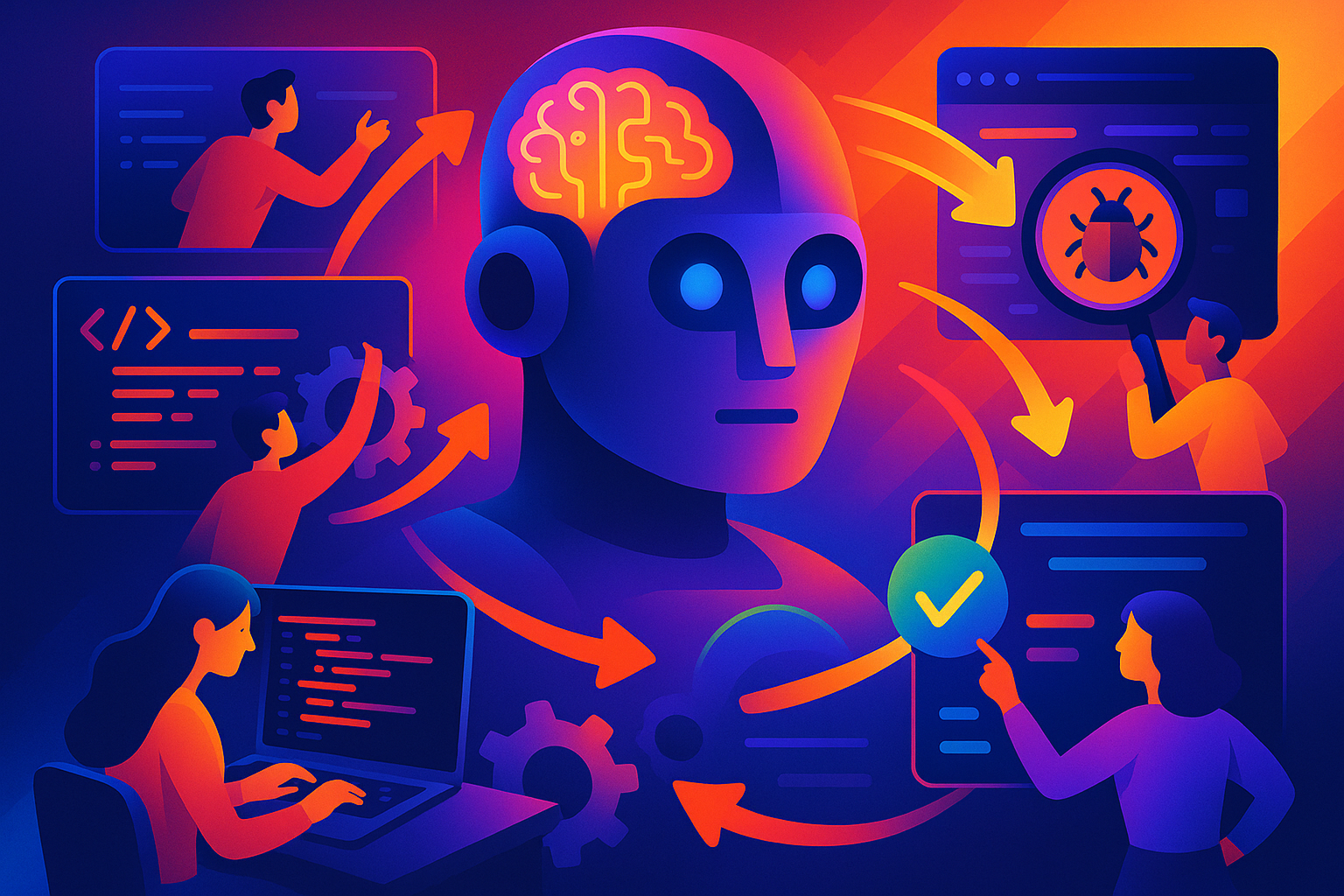
AI Automation Across the Software Development Lifecycle
AI automation now spans the whole software lifecycle, from planning to incident response. A practical map of where it helps and where judgment stays.
Read post →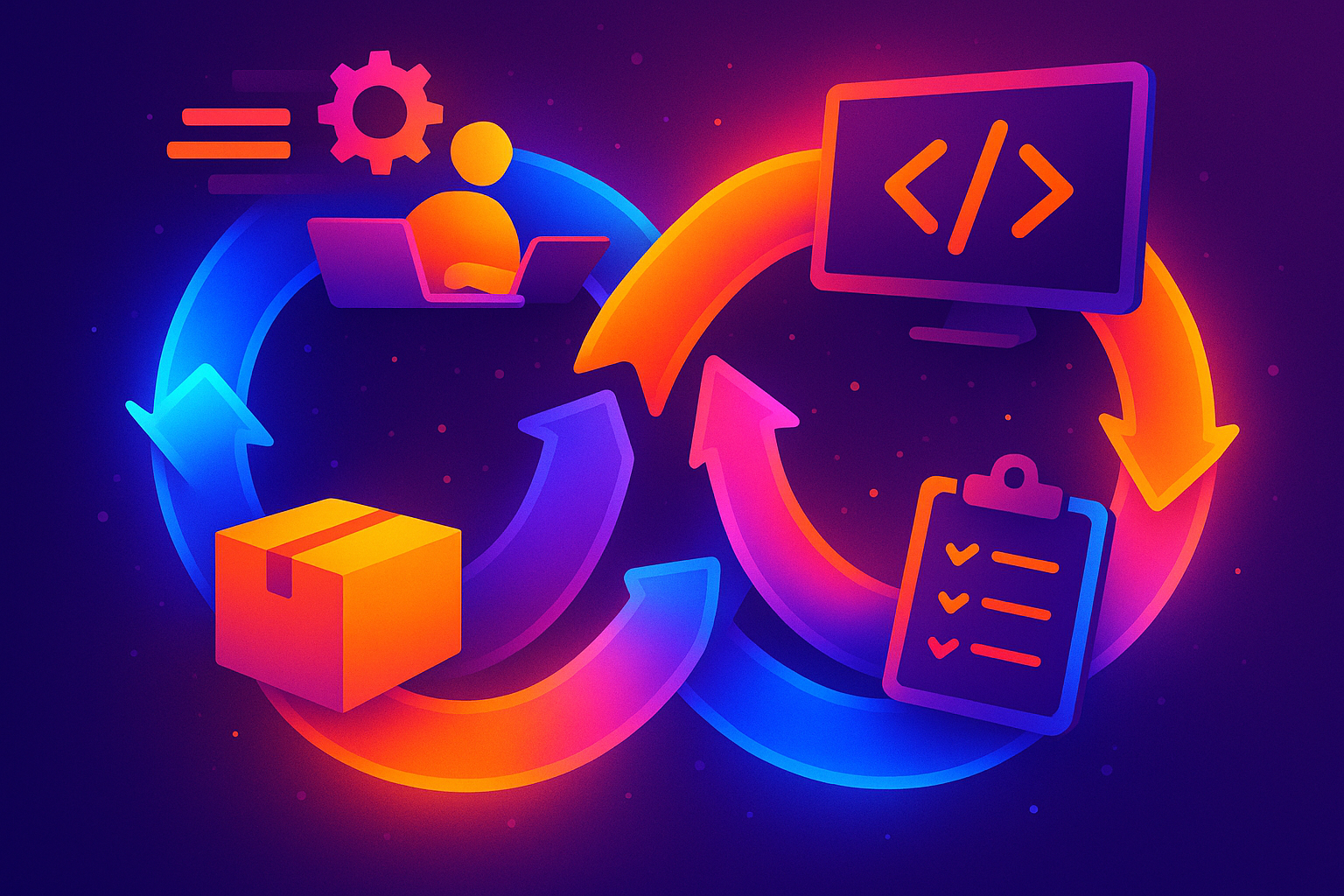
The agentic loop: how AI agents plan, code, test, and ship
The real engine of an autonomous agent is the loop, not the code generation. We walk through plan, code, test, verify, ship, and monitor, stage by stage.
Read post →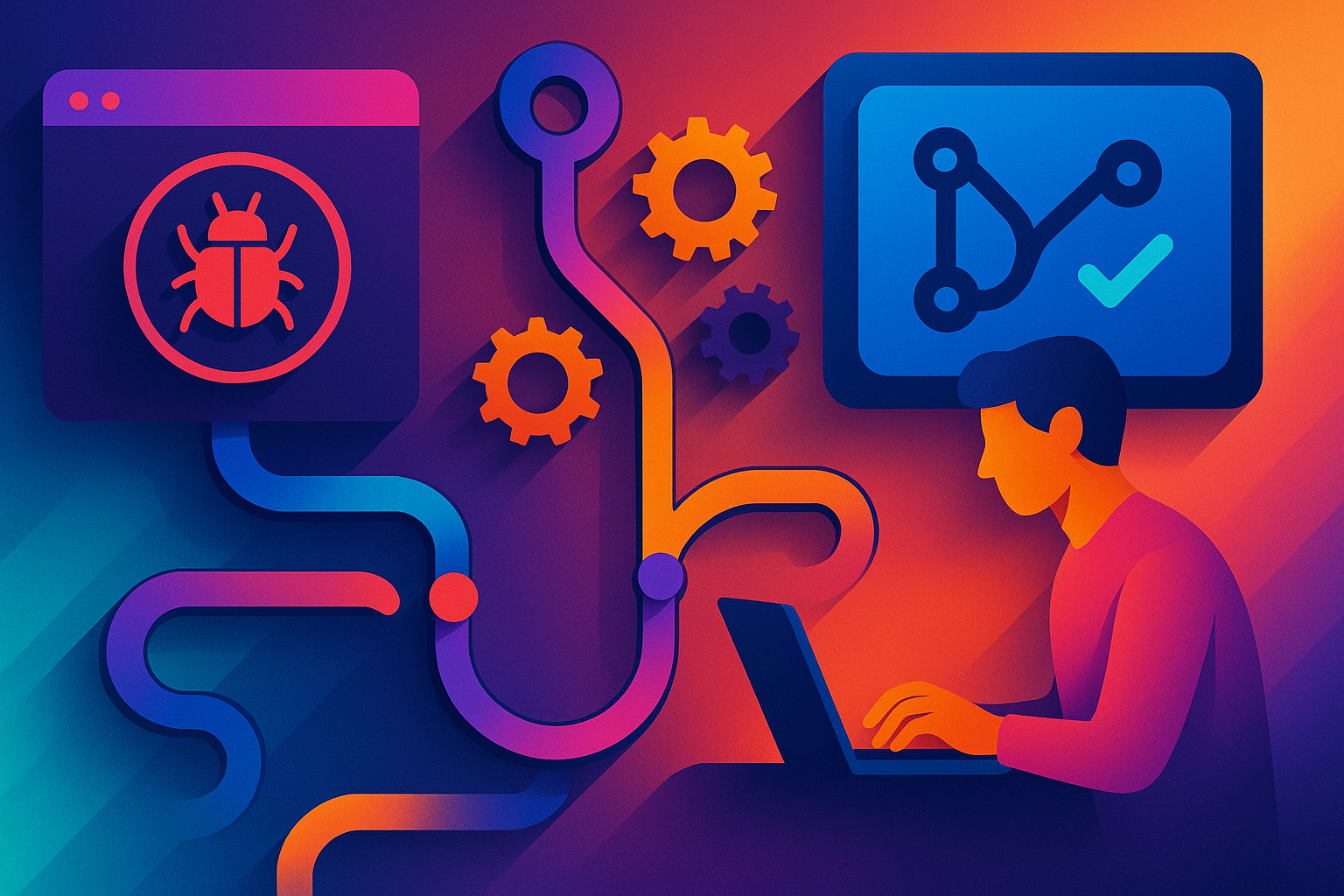
From issue to pull request: automating the dev workflow with AI
The distance from a bug report to a reviewed, merged fix is where engineering time goes. Here is how an autonomous agent automates the whole journey, issue to PR.
Read post →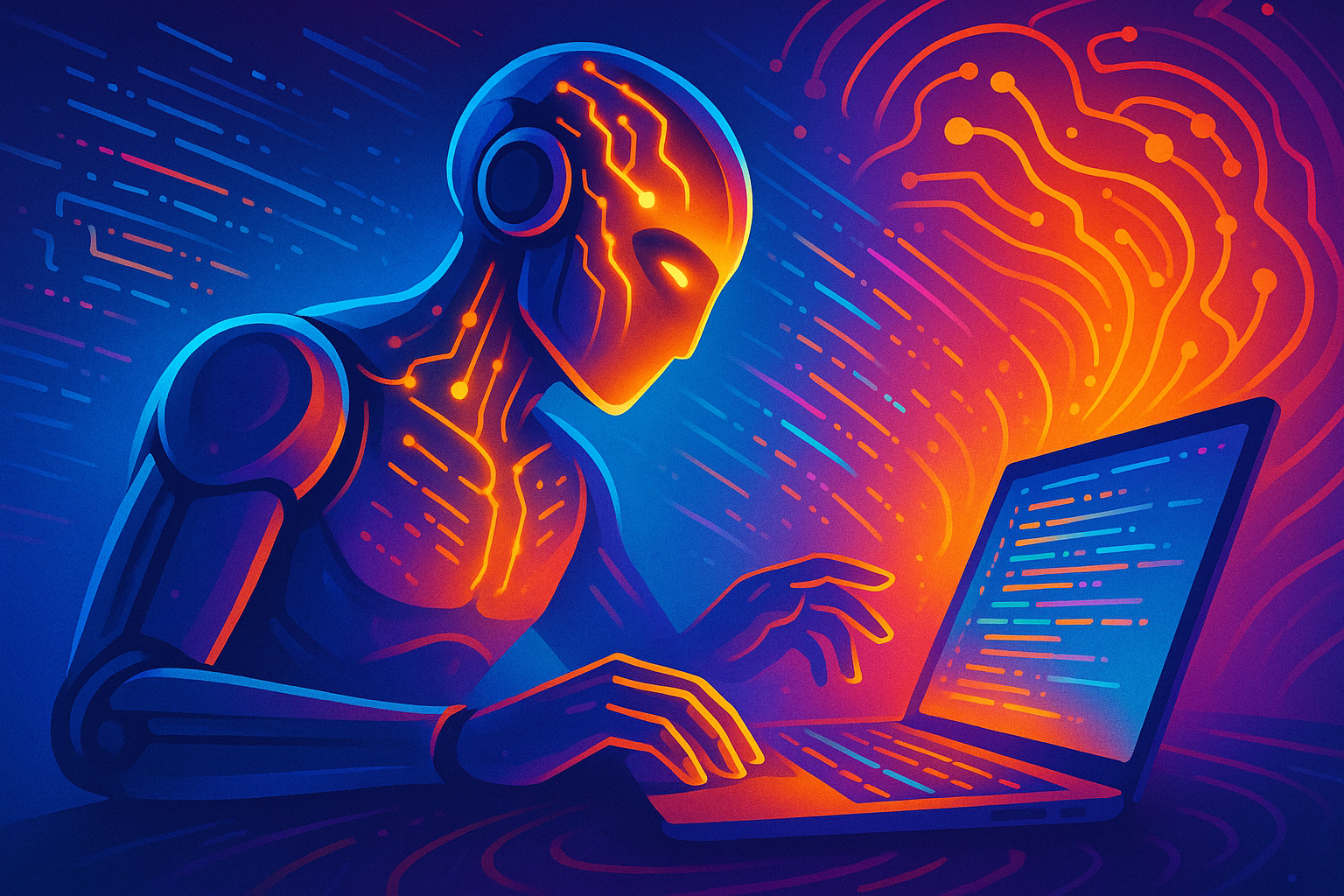
What is an autonomous AI software engineering agent?
An autonomous AI engineering agent owns a unit of work end to end: it plans, codes, tests, verifies, and ships behind human approval gates. Here is how it differs from a copilot.
Read post →
Will AI replace software developers? A realistic 2026 view
AI is not replacing developers, but it is dissolving the mechanical middle of the job and raising the value of judgment. What the role actually becomes in 2026.
Read post →
The EU AI Act: what software teams need to know in 2026
The EU AI Act is risk-based, so most software is lightly touched while a narrow set of high-stakes uses carry heavy duties. A practical 2026 guide for dev teams.
Read post →
Self-improving AI: how agents get sharper with every pass
Self-improvement is not a model retraining in the dark. It is a feedback loop: iterating against test output within a task and accumulating context across tasks.
Read post →